The United States’ has recently repeated statements about wanting to gain control over Greenland, framed as matters of strategy and security, have been widely covered in European media. The Danish government has reportedly held emergency meetings in response to what is being described as a new kind of pressure, as U.S. officials have stated that they do not exclude the possibility of military intervention.
As a Norwegian, this immediately made me think of Svalbard. Norway also holds sovereignty over a vast Arctic territory that is barely inhabited. Denmark faces a similar situation with Greenland. Both are lands once settled by Norse ancestors, and both remain largely empty today.
What interests me here is not who has the strongest historical claim, but how presence and long-term investment determine which claims endure, and which become vulnerable when external pressure reappears.

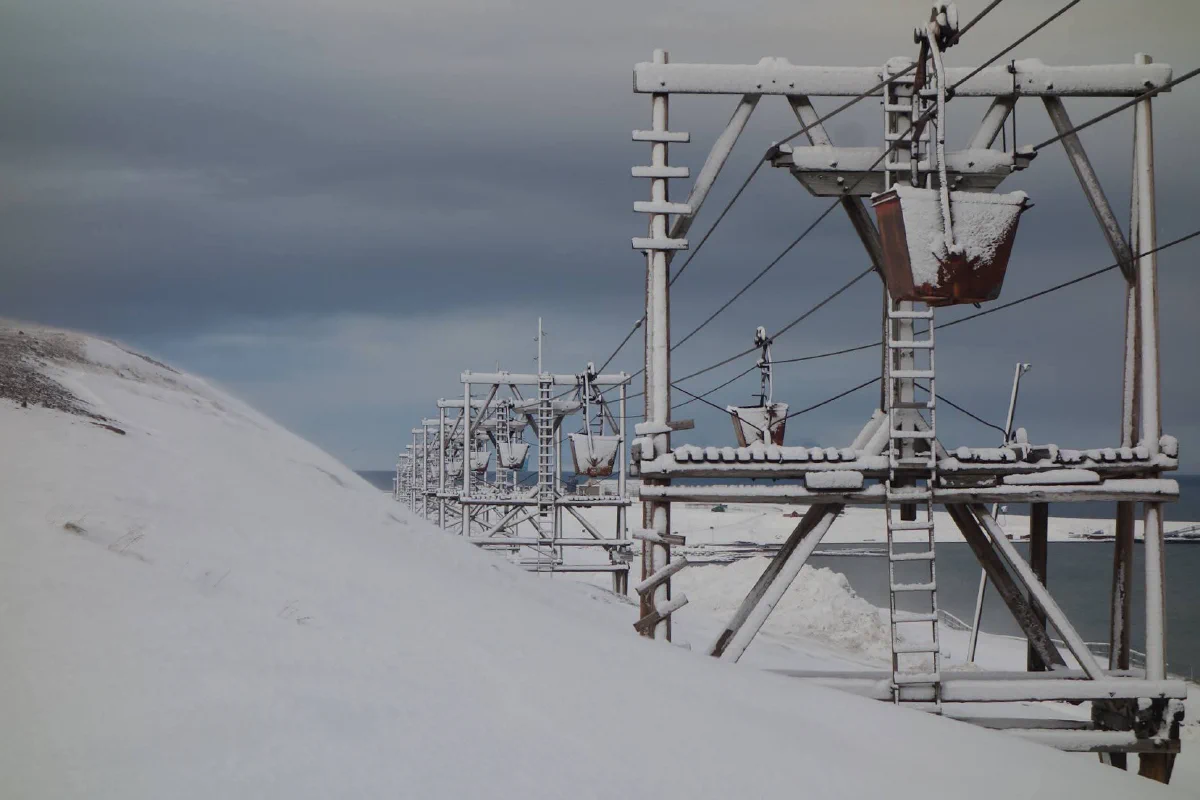
Svalbard, located far north of the Arctic Circle, was never an obvious place for permanent human settlement. For centuries, it was used seasonally for whaling and hunting. That changed with the discovery of coal deposits, which made year-round settlement viable. Longyearbyen was founded in 1906 as a result.
In 1920, following the First World War, the Svalbard Treaty was signed. The treaty emerged from a broader period of territorial reshuffling and geopolitical realignment after the collapse of European empires. It was ratified by the Netherlands, Britain, Denmark, the United States, Italy, France, Sweden, Norway, and Japan.
The treaty granted Norway sovereignty over Svalbard on the condition that all signatory states would enjoy equal rights to commercial activities, hunting, fishing, property ownership, and mineral extraction. It also prohibited Norway from establishing naval bases or fortifications, making Svalbard a demilitarized zone.
Today, Longyearbyen has around 2,900 inhabitants, corresponding to fewer than 0.04 inhabitants per square kilometer. Svalbard’s landmass is almost 19% the size of mainland Norway. The last coal mine closed in June 2025, leaving tourism, fishing, and scientific research as the primary economic activities.
Greenland, while long inhabited by Inuit populations, saw its first Norse settlements established by the Viking Eirik the Red, who was exiled from Iceland around 986 AD and then set course for Greenlands east coast. These settlements endured for centuries under harsh conditions before disappearing by the late 15th century.
Despite their disappearance, the Norwegian Crown maintained a claim of sovereignty from 1261 onward, including long periods that can best be described as paper claims, when no Norwegians lived there at all.
During the union between Denmark and Norway (1380–1814), Greenland remained officially a Norwegian dependency but was administered from Copenhagen. This changed with the Treaty of Kiel following the Napoleonic Wars, which forced the Danish king to cede Norway to Sweden. A specific clause excluded Norway’s overseas dependencies, transferring Greenland, Iceland, and the Faroe Islands to the Danish Crown.
The Second World War marked a turning point. Germany’s occupation of Denmark led to increased U.S. involvement in Greenland. Under the Kaufmann Agreement, the United States assumed responsibility for Greenland’s defense. Airbases were constructed, and German control was prevented.

After the war, U.S. forces withdrew. Denmark joined NATO, and a new Danish–American treaty once again confirmed Danish sovereignty while establishing Greenland as a joint defense area.
Greenland ceased to be a colony in 1953, and in 1979 it gained Home Rule as an autonomous territory within the Kingdom of Denmark. Recent public opinion polls have repeatedly shown a desire for independence, but economic realities have made full sovereignty difficult to achieve.
In light of recent U.S. statements about intention of acquiring Greenland, surveys indicate a strong preference among Greenlanders for continued ties with Denmark rather than a U.S. takeover, with around 85% of the poppulation stating they are opposed.
This brings us back to the question of historical claims. In Svalbard’s case, Norway’s presence has shifted over time. Settlement existed because coal mining made it economically viable. That justification no longer exists, yet tourism and research have taken its place.

One reason the Svalbard Treaty has endured may lie in its structure. Equal economic rights reduced conflict and made continued presence acceptable even as the original economic rationale faded. Still, measured by inhabited land alone, Norway makes minimal use of the territory.
History suggests that claims may age, but presence and investment are what keep them alive.
Svalbard is not unique. It offers a useful parallel for understanding Greenland.
For Denmark, the situation with Greenland appears more fragile. The Danish state continues to subsidize Greenland, while many residents express a desire for eventual independence. Sovereignty here seems to rely not only on legal continuity, but also on political will and the ability to justify long-term responsibility when status quo is challenged.

This brings us back to what may truly be at stake today. If U.S. interest were purely strategic, it already maintains a foothold through the established Pituffik Space Base on Greenland’s west coast. Existing agreements already provide access and influence.
Another possible motivation is resource extraction. Greenland holds significant deposits of minerals, including critical rare earth elements. Recent U.S. policy has emphasized securing such resources to reduce dependency on foreign supply chains. While the United States possesses its own reserves, extraction on inhabited land is slow and heavily regulated by bureaucracy. Greenland might present a different opportunity.

What remains unclear is why this interest has taken such a confrontational form. If minerals are the goal, Greenlanders themselves already seek economic independence, and cooperation could offer mutual benefit. If strategic positioning is the maim concern, existing agreements already provide leverage through an established military presence and agreements.
This raises the question of whether recent statements are intended to open negotiations, test boundaries, or simply reassert influence.
In the end, history alone rarely secures land. Claims endure when reinforced through presence, investment, and long-term commitment. When those weaken, even the strongest historical narratives can begin to fade.
In that sense, Greenland’s future may depend less on who once settled it, and more on who is willing to commit to it.
Context at a glance
Greenland has a population of roughly 57,000 people spread across a landmass of about 2,166,000 km². This corresponds to approximately 0.03 inhabitants per square kilometer, making it one of the most sparsely populated territories in the world. Large parts of the island remain permanently covered by ice.
Comments